
Benefits of HBOT
Hyperbaric oxygen therapy, often called HBOT, is a medical treatment in which a patient breathes physician-prescribed oxygen inside a pressurized chamber. Under pressure, more oxygen dissolves into the blood plasma. This helps carry oxygen to tissue where circulation or oxygen delivery has been reduced.
For the right patient and the right condition, that added oxygen can give injured or oxygen-deprived tissue a better environment for healing. HBOT is not a general wellness treatment or a stand-alone cure. It is used after clinical evaluation and as part of a physician-directed treatment plan.

Under normal conditions, oxygen travels through the body mostly by attaching to red blood cells. During HBOT, the increased pressure allows more oxygen to dissolve directly into the plasma, the liquid part of the blood. Because plasma circulates through small blood vessels, oxygen dissolved in the plasma may be able to reach tissues affected by swelling, damaged vessels, infection, radiation injury, or trauma. HBOT does not replace the rest of a patient’s care. It may help support healing when poor oxygen delivery is part of the problem.
That matters because plasma circulates through small blood vessels and can help increase oxygen availability in tissues affected by swelling, damaged vessels, infection, radiation injury, or trauma. HBOT does not replace the rest of a patient’s care. It may help support healing when poor oxygen delivery is part of the problem.

Why oxygen matters in healing
Healing tissue needs oxygen. When oxygen levels are low, wounds may heal more slowly, damaged tissue may struggle to recover, and the body’s response to infection may be less effective.
By increasing oxygen delivery, HBOT may help support several parts of the healing process, including:
- wound healing in oxygen-deprived tissue;
- tissue repair after certain injuries;
- white blood cell function in some infections;
- new blood vessel growth;
- collagen formation and skin-cell activity;
- recovery in tissue affected by swelling, poor circulation, radiation injury, or trauma.
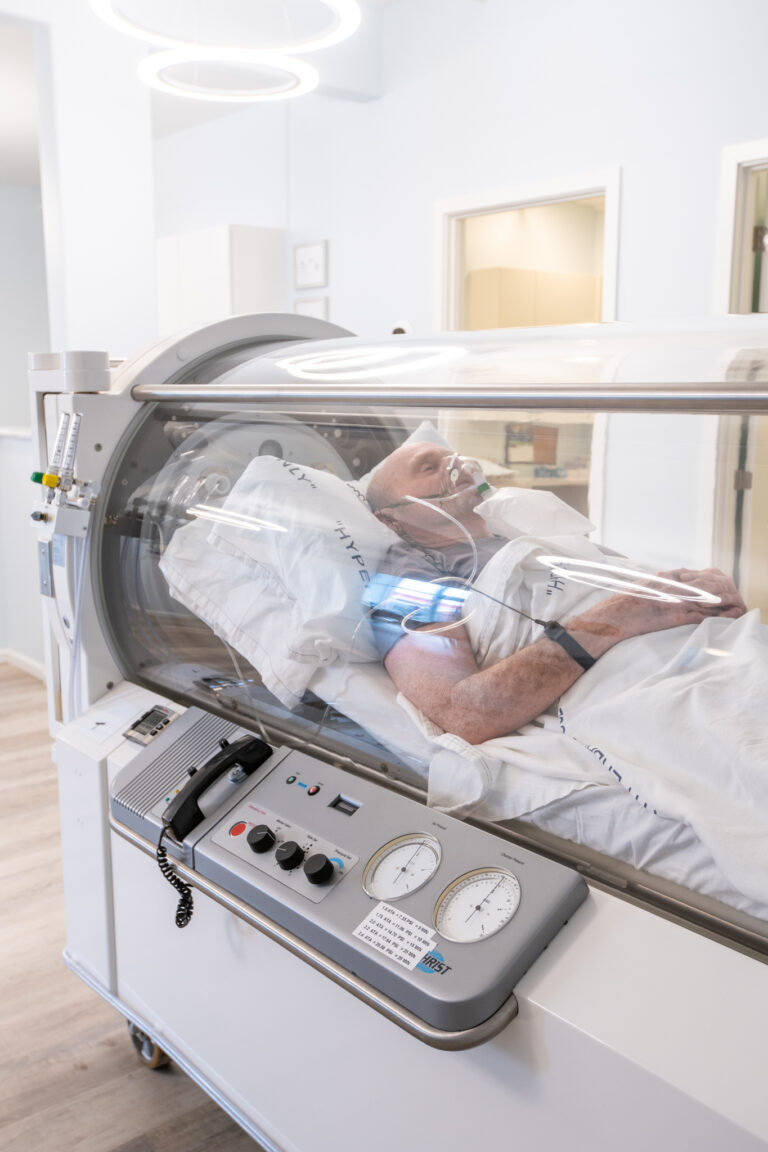
Areas where HBOT may help
Wounds with poor oxygen delivery
Some wounds do not receive enough oxygen because of poor circulation, swelling, damaged blood vessels, or tissue injury. When oxygen delivery is part of the problem, HBOT may help by increasing the amount of oxygen available to the affected tissue.
This can be especially important when HBOT is used along with appropriate wound care and medical management.
Certain injuries and tissue stress
Some injuries interrupt blood flow to tissue. When circulation returns, the tissue can remain stressed and inflamed. HBOT may be considered in selected cases where oxygen delivery, swelling, and tissue recovery are part of the treatment concern.
Infection support
Oxygen levels can affect how the body responds to certain infections. In some medically appropriate situations, HBOT may help white blood cells work more effectively in oxygen-poor tissue and may make the local tissue environment less favorable for some bacteria.
HBOT is not a replacement for antibiotics, surgery, wound care, or other needed treatment. When used for infection-related care, it is one part of a broader medical plan.
Tissue repair after radiation injury, trauma, or poor circulation
Tissue damaged by radiation injury, trauma, infection, or poor circulation may need support for repair. HBOT may help by improving oxygen availability in the tissue and supporting processes involved in blood vessel growth, collagen formation, and skin-cell activity.
The goal is not to promise a result for every wound or every patient. The goal is to use HBOT when the diagnosis, medical history, and treatment plan make it appropriate.
Part of a medical treatment plan
HBOT is provided in a controlled clinical setting with patient screening, safety protocols, and medical supervision. Before treatment begins, the clinical team reviews the patient’s condition, medical history, risks, and treatment goals.
Some patients are good candidates for HBOT. Others are not. Coverage and treatment recommendations depend on the diagnosis, documentation, payer requirements, and the physician-directed plan of care.
If you are wondering whether HBOT may be appropriate for you or someone you care for, contact Hyperbaric Oxygen Treatment Center. Our team can help you understand the evaluation process, what records may be needed, and whether HBOT should be discussed as part of your medical care.